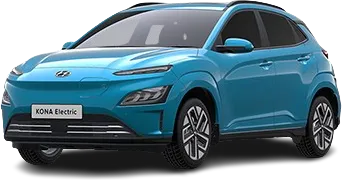
The Hyundai Kona Electric is an exceptionally popular electric SUV in Nepal, distributed by Laxmi Intercontinental. This vehicle is equipped with a 39.2 kWh battery pack that delivers a range of 305 km. For Nepal's hilly and steep terrain, its 395 Nm of torque is highly effective, providing the vehicle with instant power.
Performance and Engine
1. Displacement: 64.8 kWh (Battery Capacity)
In the world of electric vehicles, battery capacity in kilowatt-hours (kWh) is the functional equivalent of engine displacement. The Kona Electric features a high-density 64.8 kWh Lithium-ion battery pack, providing the energy storage necessary for a WLTP-rated range of up to 514 km.
2. Max Power: 201 bhp (150 kW)
The front-mounted Permanent Magnet Synchronous Motor (PMSM) delivers a peak power output of 150 kW, which translates to 201 bhp. Unlike petrol engines, this power is delivered with 90%+ efficiency, providing immediate response without the delay of a combustion cycle.
3. Max Torque: 255 Nm
The Kona Electric produces 255 Nm of peak torque. Because electric motors generate maximum torque at 0 RPM, the vehicle offers exceptional "off-the-line" acceleration, making it highly effective for city driving and merging onto highways.
4. Fuel System: 100 kW DC Fast Charging
The "fuel system" consists of a CCS2 charging port. The Kona supports 100 kW DC fast charging, allowing the battery to go from 10% to 80% in approximately 43 minutes. For home charging, an 11 kW onboard AC charger is used.
5. 0-100 km/h Time: 7.8 Seconds
Despite its focus on efficiency, the Kona Electric achieves a 0-100 km/h sprint in just 7.8 seconds in Sport mode. This brisk performance is aided by the lack of gear shifts, providing a continuous "linear" pull of acceleration.
6. Top Speed: 172 km/h
The top speed is electronically limited to 172 km/h. Limiting the top speed is a strategic engineering choice in EVs to prevent the motor from over-revving and to protect the battery from the extreme heat generated at high discharge rates.
Transmission and Drivetrain
1. Gearbox Type: Single Speed Reduction Gear
Traditional multi-speed gearboxes (CVT/DCT) are replaced by a single-speed reduction gear with a ratio of 7.981. This simplifies the drivetrain, reduces weight, and provides a perfectly smooth driving experience without shift shocks.
2. Drive Type: FWD (Front-Wheel Drive)
The Kona Electric is Front-Wheel Drive, with the motor positioned directly between the front wheels. This layout maximizes cabin and "frunk" (front trunk) space while providing stable traction for daily commuting.
3. Clutch Type: None (Direct Drive)
There is no mechanical clutch. The connection between the motor and the wheels is permanent. When you stop, the motor simply stops spinning, and when you reverse, the motor's electrical polarity is swapped to spin it backward.
Dimensions and Weight
1. Length: 4,355 mm
The new Kona is significantly longer than the previous generation, improving its aerodynamic drag coefficient to 0.27. This length allows for better stability and a larger "living space" for passengers inside.
2. Width: 1,825 mm
At 1,825 mm, the Kona provides a wide, planted stance. The extra width is utilized for a more ergonomic dashboard and wider seats, which are essential for long-distance comfort.
3. Height: 1,575 mm
The 1,575 mm height offers a traditional SUV seating position. The roofline is aerodynamically sculpted to taper toward the rear, reducing the wake of air and extending the highway range.
4. Wheelbase: 2,660 mm
The 2,660 mm wheelbase is 60 mm longer than before. This "stretch" is critical for EVs as it creates more room between the wheels to house a larger, more efficient battery pack.
5. Ground Clearance: 151 mm
Ground clearance is 151 mm. While lower than some off-road SUVs, this low-slung design keeps the heavy battery closer to the ground, resulting in a center of gravity that rivals some sports sedans.
6. Kerb Weight: 1,735 kg
The Kona Electric is heavier than its petrol siblings due to the battery weight. However, the weight distribution is nearly 50:50, which improves cornering balance and overall handling predictability.
7. Turning Radius: 5.3 Meters
A 5.3m turning radius ensures the Kona remains a "city-first" vehicle. It can easily perform U-turns in standard 2-lane roads, making it highly agile in urban environments.
Capacities
1. Boot Space: 466 Litres
The Kona EV offers a generous 466 litres of boot space, expandable to 1,300 litres with seats down. It also includes a 27-litre "frunk" under the hood for charging cable storage.
2. Seating Capacity: 5 Persons
The interior seats five comfortably. Because there is no exhaust pipe or drive shaft, the floor in the rear is completely flat, providing much better legroom for the middle passenger.
Safety and Security
1. Airbag Count: 7 Airbags
Safety is paramount with 7 airbags, including a "Center-Side" airbag between the driver and passenger to prevent head-to-head contact during side-impact collisions.
2. ABS with EBD: Standard
The ABS system is integrated with the regenerative braking. When you hit the brakes, the car uses the motor to slow down first, and the mechanical ABS only kicks in if more force is needed.
3. Electronic Stability Control (ESC): Standard
ESC in the Kona EV is calibrated for electric torque. It prevents the front wheels from spinning out during hard acceleration by instantly cutting power to the motor.
4. Hill Start Assist: Standard
Hill-start Assist Control (HAC) holds the vehicle for 2 seconds on a slope. In an EV, this is often handled automatically by the electric motor's "Auto Hold" function.
5. ISOFIX: Standard
Dual ISOFIX points in the rear make it easy to secure child seats. The wide-opening rear doors further simplify the process of loading and unloading child safety seats.
6. NCAP Safety Rating: 5 Star (Expected)
The Kona is built with Advanced High Strength Steel (AHSS). While regional ratings vary, the structure is designed to protect the battery pack from intrusion in a crash.
Chassis, Suspension and Brakes
1. Front/Rear Suspension: MacPherson Strut / Multi-Link
The front uses MacPherson struts, while the rear features a sophisticated Multi-Link independent suspension. This ensures that the extra weight of the battery doesn't compromise ride comfort.
2. Front/Rear Brake Type: Disc / Disc
Ventilated discs at the front and solid discs at the rear provide strong stopping power. The regenerative braking system significantly reduces wear on these physical brake pads.
3. Tyre Size: 215/60 R17 (Aero Alloy)
The 17-inch wheels are "Aero-Optimized" with flat surfaces to reduce air turbulence, which can increase the driving range by several kilometers at highway speeds.
Interior and Tech
1. Infotainment Size: 12.3-inch Touchscreen
The dashboard features a massive 12.3-inch display with the new ccNC (connected car Navigation Cockpit), which supports Over-the-Air (OTA) updates for the car's software.
2. Connectivity: Wireless Apple CarPlay / Android Auto
Full smartphone integration is standard and wireless. It also includes Bluelink services to check battery levels and pre-condition the cabin temperature from your phone.
3. Instrument Cluster: 12.3-inch Digital Cluster
The driver gets a fully digital 12.3-inch cluster that shows energy flow, remaining range, and even blind-spot camera feeds when the turn signal is activated.
4. Climate Control: Dual Zone with Heat Pump
The Kona uses a Heat Pump system for climate control. This is much more efficient than a traditional heater and preserves battery range during winter driving.
Other Data Points
1. Service Intervals: 15,000 km / 1 Year
Because there is no oil, spark plugs, or timing belts, maintenance is minimal. Services mainly involve checking coolant levels, tire rotation, and cabin filter replacement.
2. Warranty: 8 Years on Battery
The high-voltage battery is covered by a massive 8-year / 160,000 km warranty, ensuring that the most expensive component of the car is protected against degradation.
3. Proprietary Tech: V2L (Vehicle-to-Load)
The Kona features V2L technology, allowing you to plug in household appliances (like a coffee machine or laptop) into the car's charging port to use the battery as a power source.