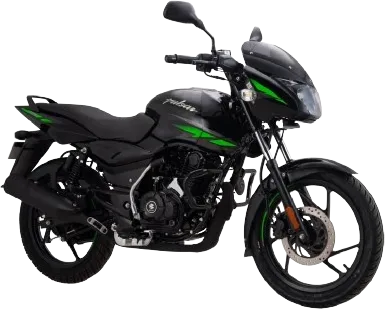
Engine Displacement: 124.4 cc
The Pulsar 125 is powered by a 124.4 cc, single-cylinder, 4-stroke, 2-valve engine. It features Bajaj's patented DTS-i (Digital Twin Spark Ignition) technology, which utilizes two spark plugs to ensure more efficient combustion, leading to better power delivery and fuel economy.
Max Power: 11.8 PS @ 8500 rpm
The engine produces a maximum power of 11.8 PS (approx. 11.64 bhp). This is significantly higher than most standard 125cc commuters, giving the Pulsar 125 its signature sporty character and the ability to maintain higher speeds more comfortably than its rivals.
Max Torque: 10.8 Nm @ 6500 rpm
With 10.8 Nm of torque peaking at 6500 rpm, the bike offers a strong mid-range. This makes it very capable for "filtering" through Kathmandu's traffic without needing to constantly redline the engine to find usable power.
No. of Cylinders: 1
Consistent with the 125cc segment, it uses a single-cylinder layout. This setup is chosen for its simplicity, ease of maintenance, and the characteristic Pulsar exhaust note that remains a key selling point in the Nepalese market.
Valve Train: SOHC, 2-Valve
The Pulsar 125 utilizes a Single Overhead Cam (SOHC) with 2 valves. This traditional setup is tuned for reliability and low-end grunt, ensuring the bike is easy to live with for daily commutes while remaining mechanically straightforward for local servicing.
Fuel System: Fuel Injection (FI)
The latest BS6-compliant models in Nepal feature Electronic Fuel Injection. This replaces the old carburetor system to provide more precise fuel delivery, which is vital for maintaining performance across varying altitudes from the Terai plains to the Kathmandu valley.
Top Speed: 100 km/h
The bike is capable of reaching a top speed of 100 km/h. While it is happiest cruising between 70–80 km/h, the aerodynamic tank shrouds help maintain stability when pushed to its limit on open highways.
Mileage: 50–55 kmpl
In real-world riding conditions across Nepal, riders can expect a mileage of 50–55 kmpl. This makes it one of the most economical ways to experience the "Pulsar" brand without the higher fuel consumption of the 150cc or 220cc variants.