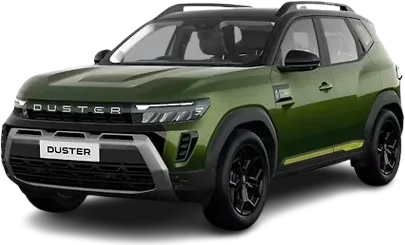
Engine Displacement: 999 cc (TCe 100) / 1,333 cc (TCe 160) / 1,800 cc (Hybrid)
The 2026 Renault Duster lineup offers diverse mechanical architectures. The TCe 100 is a 3-cylinder turbocharged unit designed for efficiency. The TCe 160 uses a 1.3L 4-cylinder turbo with direct injection and a 48V mild-hybrid system for performance. The Strong Hybrid (E-Tech 160) features a 1.8L naturally aspirated engine paired with a 1.4 kWh battery and dual electric motors, allowing for up to 80% of city driving in pure EV mode.
Max Power: 100 PS (TCe 100) / 163 PS (TCe 160) / 160 PS (Hybrid Combined)
The power delivery across the range is tailored for Indian driving conditions. The 1.3L Turbo (TCe 160) is the powerhouse of the segment, delivering a class-leading 163 PS, while the Hybrid variant focuses on a seamless blend of electric torque and petrol power to maintain a combined output of approximately 160 PS.
Max Torque: 160 Nm (TCe 100) / 280 Nm (TCe 160) / 172 Nm (Engine only - Hybrid)
Torque is where the 1.3L Turbo shines, providing 280 Nm from as low as 2,000 rpm, making highway overtakes effortless. The TCe 100 provides a steady 160 Nm, suitable for urban commutes. The Hybrid’s electric motors provide instant low-end torque, though the engine itself is tuned for a peak of 172 Nm.
No. of Cylinders: 3 (TCe 100) / 4 (TCe 160 & Hybrid)
The entry-level TCe 100 utilizes a 3-cylinder configuration to reduce friction and weight. The higher variants (TCe 160 and Hybrid) utilize 4-cylinder blocks, which offer superior refinement and significantly lower NVH (Noise, Vibration, and Harshness) levels at high speeds.
Valve Train: DOHC (Double Overhead Camshaft)
All variants utilize a DOHC setup with 4 valves per cylinder. The TCe 160 specifically introduces dual variable timing camshafts with roller tappets to optimize the air-fuel mixture across the rev range, enhancing both power and fuel economy.
Fuel System: GDI (Gasoline Direct Injection)
The 1.3L and 1.8L engines utilize high-pressure Direct Injection to spray fuel directly into the combustion chamber. This allows for higher compression ratios and better cooling of the intake charge, which is essential for the 2026 BS6 Phase 2.0 emission norms.
0-100 km/h Time: ~9.2 seconds (TCe 160 DCT)
While the TCe 100 focuses on economy, the 1.3L Turbo DCT is the sprinter of the group, reaching triple digits in approximately 9.2 seconds. The Strong Hybrid variant is expected to clock in around 10.5 seconds due to the weight of the battery pack, despite the instant electric start.
Top Speed: 185 km/h (Electronically Limited)
The Duster is aerodynamically stable at high speeds, with the TCe 160 capable of hitting a top speed of 185 km/h. However, for safety and tire longevity, most Indian variants are software-limited to manage thermal loads effectively.